
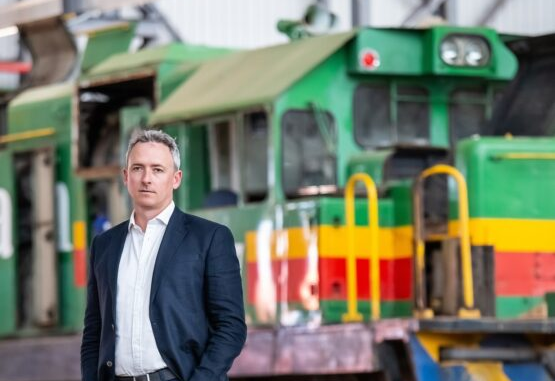
The rail operator will purchase 46 locomotives and 920 wagons from KiwiRail in New Zealand. From Moneyweb.
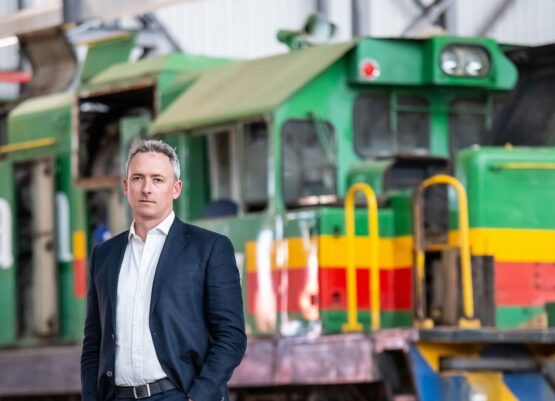
Private rail operator Traxtion will invest R3.4 billion in 46 locomotives and 920 wagons from KiwiRail in New Zealand – which operates the same Cape Gauge environment used in SA.
The company says the investment is fully funded, with equity backing from Harith Partners, which owns 50.39% of Traxtion, along with debt funding from Absa.
A further R2.4 billion in future investment is planned as SA embarks on crucial reform of its railway network, allowing private operators to run on independently managed rail infrastructure for the first time in nearly a century.
At a media presentation on Tuesday, Traxtion CEO James Holley said this was the largest private freight rail investment in SA history, and a direct response to the reform direction adopted by government.
“Private capital flows when government policies create confidence in the private sector to invest. This investment is our vote of confidence in South African rail and in the reform momentum we are seeing,” said Holley.
“Every additional locomotive we put to work lowers logistics costs, protects the road network, improves our environmental footprint and creates jobs in the upstream economy.”
Rail reforms
The investment is a credit to the Department of Transport for the design of these reforms, Operation Vulindlela for driving them forward, and the supporting role played by National Treasury and independent regulator, said Holley.
Traxtion has been operating in Africa for 38 years, but this marks its first venture into SA rail – a market previously dominated by the Transnet monopoly.
It operates 55 locomotives and maintains over 100 locomotives and 450 wagons on a daily basis across 10 countries in Africa.
The investment will increase SA’s rail haulage capacity by 4.5 million tonnes (Mt) a year, equal to about 5% of Transport Minister Barbara Creecy’s target to boost rail volumes from 160 to 250 Mt annually.
Read:
Creecy punts private sector investment for five rail and port corridors
South Africa seeks private investment in passenger rail services
Vulindlela 2.0 a shift from ‘repairing the old’ to ‘enabling the new’
Pivotal reform in Transnet’s final Network Statement
The R3.4 billion investment comprises R1.8 billion in locomotives and R1.6 billion in wagons. It will take delivery of the first six of the 46 Wabtec locomotives in May 2026, upgrade them to C30MEI specification, featuring new, fuel-efficient engines and advanced Brightstar control systems that improve performance and reliability.
All upgrade work will take place at Traxtion’s Rail Services Hub in Rosslyn, anchoring local manufacturing and supplier participation.
All equipment will be fully operational by 2028.
Four of the locomotives are fully modernised and the remaining 42 are partially modernised and will undergo further upgrades once in SA, which will result in a 15% fuel saving.
“All components will be latest generation or extremely reliable. We operate this technology outside SA and it has proven dependable,” added Holley.
The equipment will undergo major servicing every six years. Downstream suppliers, mainly SMEs, will benefit from around R200 million in procurement. Some 60% of the project needs will be satisfied through local content.
Jobs and local manufacturing
A total of 662 permanent jobs will be created, with an expected multiplier of five times once upstream job creation is added. The project will create multi-year demand for components, maintenance and technical services to deepen South Africa’s rail services and manufacturing base.
Holley says SA wagon manufacturers are globally competitive and are gearing up to supply projects of this scale.
“This will be a catalytic project that marks the start of a reformed and competitive rail freight environment for SA.
“We have structured this programme to maximise South African industrial value-add, such as local assembly, supplier development and skills transfer, while getting modern locomotives and wagons into service as quickly as possible. The objective is to move more freight by rail, reliably, and at scale. We expect that all the wagons for this project will be domestically manufactured by our existing trusted wagon suppliers.
“Rail is a network industry. When trains move efficiently, the whole economy moves.
“This programme is about getting South Africa’s freight system working for growth and proving that private-sector investment, aligned with reform, can deliver fast, measurable gains for the country and the region,” added Holley.
Read:
Rail reform milestone puts SA economy back on track
Identifying the bugs in SA’s long-promised infrastructure boom
Port of Gauteng aims to revitalise rail, remove 30% of trucks from the N3
Investments such as this are repeatable when the business case is right.
South Africa can capture the same benefits, like more tonnage on rail, lower system costs, and stronger industrial spillovers if we keep momentum on reform, access and the planned infrastructure PSPs [private sector participations], according to Holley.
Traxtion says it is not dependent solely on winning rail slots under the new auction system introduced to allow third party operators onto Transnet’s rail network. Some mines are considering operating their own bulk freight rail services, while other third-party providers would also be potential customers for Traxtion.
